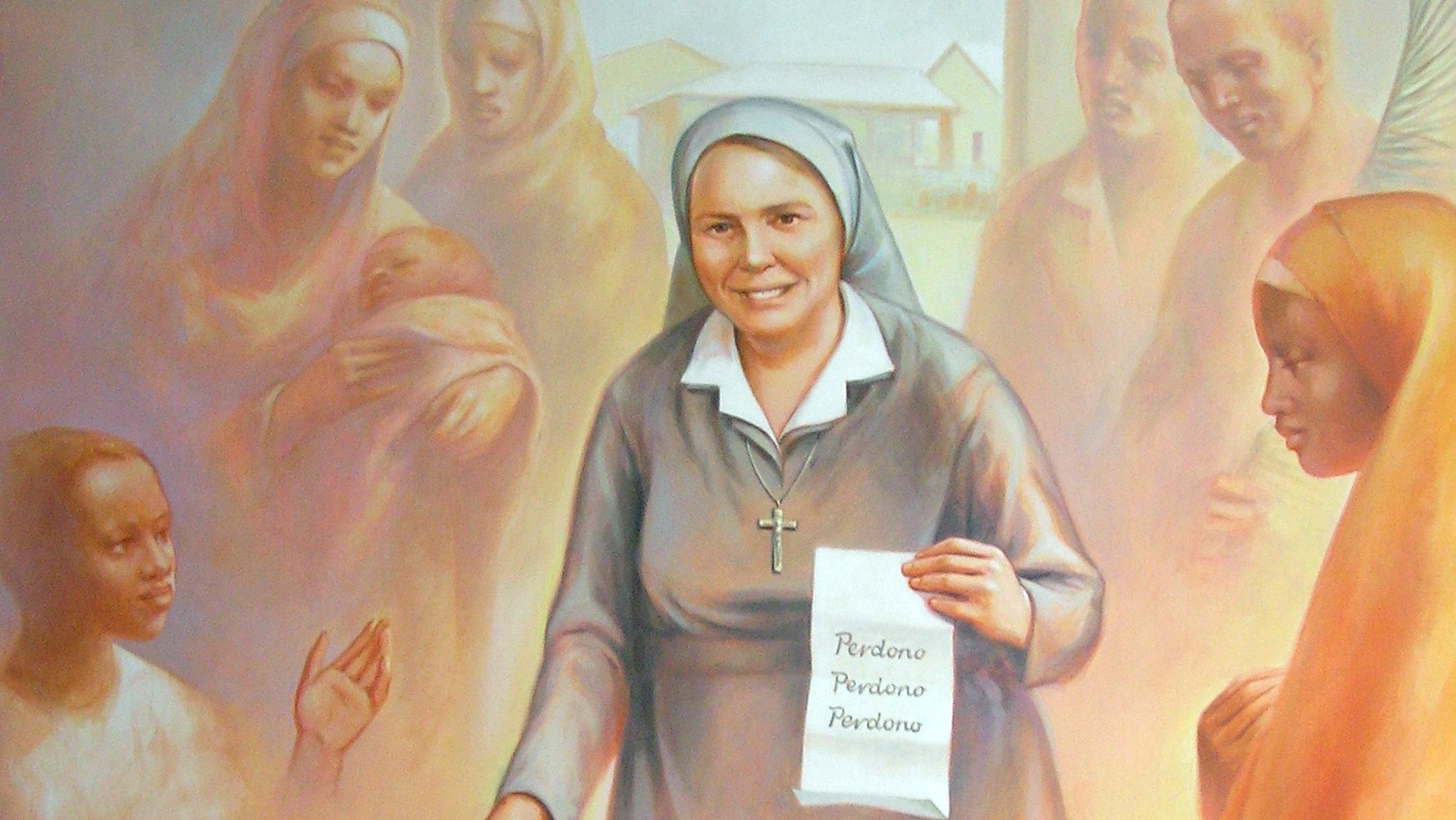

Sister Irene Stefani, called Nyaatha by the Kikuyu people, embodied feminine strength and sweetness in her missionary consecration, bringing the ideal of Saint Joseph Allamano to a supreme degree of self-giving.
The “Soft” Fortress of Nyaatha
Sister Irene demonstrates that true strength lies in the ability to endure with gentleness. During the war, amidst mud, disease, and exhausting hardship, her dominant feminine quality was stability.
“Her strength did not lie in shouting or imposing herself, but in remaining there, beside the wound, until it was healed.”
And Father Giglio Domenico further states:
Throughout the region, Sister Irene was well known; her visits were greatly welcomed, her passing brought joy, her warm and affectionate words enlightened those minds, instilling resignation, courage, and hope for a better future. To patience, charity, and zeal for the glory of God and the salvation of souls, she added a profound humility; indeed, in my opinion, this was her predominant virtue. Sister Irene, gifted with beautiful qualities of mind and heart, considered herself the last of all.
Despite the times (early 1900s), Saint Joseph Allamano encouraged women to show extraordinary strength of spirit, seeing in them a unique capacity for resilience.
“I want strong women, with great spirits, who are not afraid of difficulties. The mission requires generous hearts that know how to give themselves without reserve, with the strength that only love can give.”
Intuition and Empathy – The Heart’s Eye
Irene possessed that typically feminine quality of “feeling” a need even before it was expressed. She could read in her patients’ eyes what language (often different from her own) could not express.
Her “Caress” was like medicine: she understood that a plague patient needed medical care, but even more so, not to feel like an outcast. Her caress broke the isolation of illness.
One of her fellow nuns (Sr. Secondina Granero) remembers her thus:
“Knowing someone was sick, she would have in her ardent heart go there to assist him, paying no attention to rain, nor cold, neither day nor night, nor tiredness, just to help him in everything with love. Furthermore, she no longer cared about thirst or hunger, just to help him and pray for the sick person that God’s will for him would be done, and to have everyone present pray; and she was desired by everyone because they saw that if that dear sister was there, things went well, whether she recovered or the hour of death had come. With the presence of that soul, everyone was happy.”
Her frequent and, when he could, even prolonged visits to Jesus in the Blessed Sacrament, his ardour in speaking of God in his catechisms to the students at school, to the sick after their medical care, to the natives in their villages, were clear proof of the burning love of God with which his heart was inflamed.
Irene, the Bride of Charity, of Holiness
Nyaatha lived her consecration as a relationship of total love. Her “passion” was reflected in the way she treated each poor person: as if they were the Bridegroom, Jesus. Her femininity was therefore oriented towards the Other, in a gift of self that asked nothing in return.
Allamano repeated that mission without holiness is merely empty philanthropy. The missionary was to be a “channel” receiving from God in order to give to others. He repeated to his missionaries, “First saints, then missionaries.” He didn’t want women rushing to do a thousand things while forgetting prayer. Their strength had to come from union with God, otherwise they would be “exhausted” by the toils of the field.
“If we are not saints, we cannot sanctify others.”
And Sr. Irene became a saint. Those who knew her as a postulant, novice, professed, and in the field of apostolate cannot help but repeat: “She was a saint.”
Sr. Gabriella Margarino wrote:
“I always observed in Sr. Irene a heroic charity; she always had one foot raised to serve others, regardless of whether she was at table or resting, engaged in urgent work, or engaged in interesting conversation. She was all eyes, all hands, all feet, all heart, all sacrifice to please and serve others, making no distinction between skin color…”
Sr. Hellen Waithera, mc