Recently, someone looking at a world map reflected on the shape of Asia, noting that it is a continent that stretches out horizontally—a continent with open arms. Asia is the cradle of great civilizations and ancient spiritual traditions, and it is embracing with dedication the Church’s call to synodality. This continent encompasses a highly diverse reality; there are countries where Christians form the majority, and others where they are but a small flock.
Walking together and becoming bridges
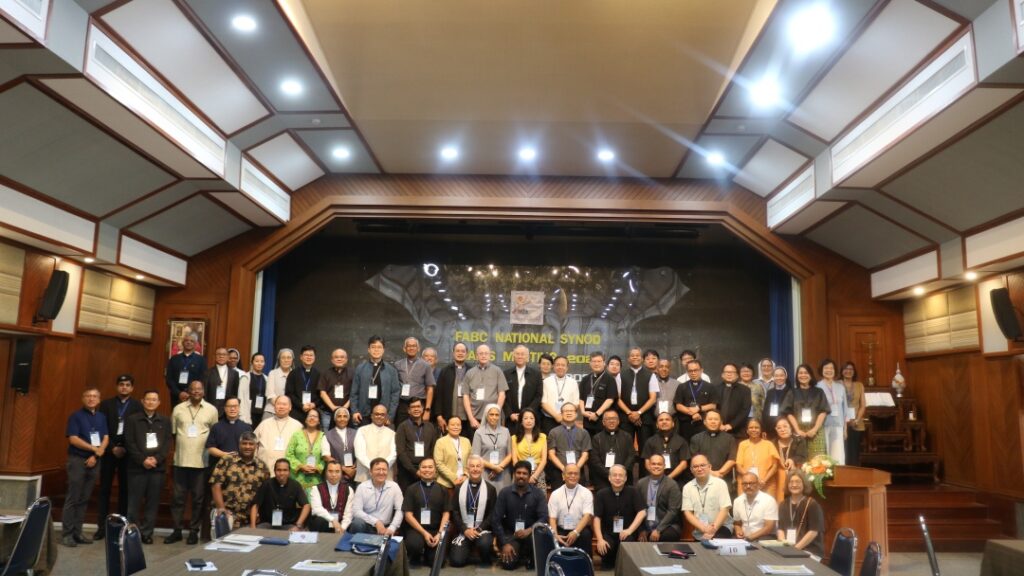
From August 31 to September 4, 2026, the Federation of Asian Bishops’ Conferences (FABC) organized a meeting for national synodal teams from various Asian countries at the Baan Phu Wan Pastoral Center of the Archdiocese of Bangkok, Thailand.
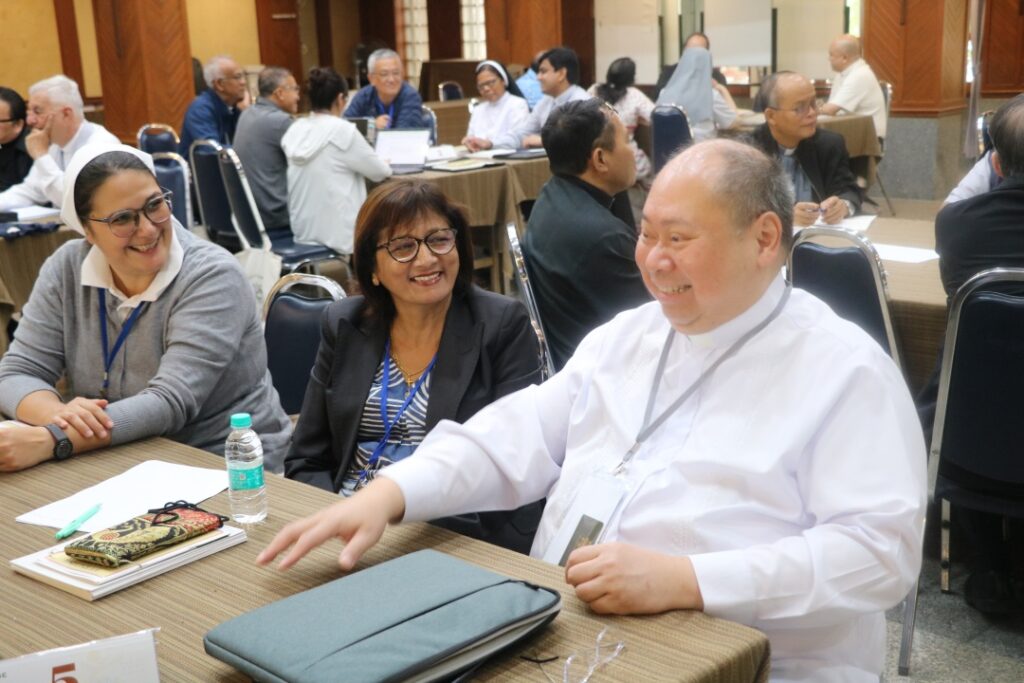
More than 75 delegates – including cardinals, bishops, priests, religious, and laypeople – took part. It was an opportunity to listen to one another, share challenges and the initial fruits of the Church’s synodal pilgrimage in Asia, and look toward the future.
Synodality is not just about meetings, structures, or documents. We listen together so that we may discern together. We discern together so that we may be sent forth together
said Bishop Joseph Do Manh Hung of Phan Thiet (Vietnam) during the opening Mass of the gathering.
The synodal journey requires a generous openness of heart, humility, courage, and a conversion of one’s perspective and language. It is a path of profound dialogue and listening that becomes a spiritual discipline, placing the Holy Spirit—and His breath—at the center.
The Holy Spirit sets off a profound and varied process within the Church community: the “commotion” of Pentecost. Something odd happened at Pentecost: everything had been organized, everything was clear… That morning there was an uproar, everyone speaking in every language, and everyone understanding… A variety in which it was not clear what everything meant… And after this came the great work of the Holy Spirit: not unity, no, but harmony. The Spirit unites us in harmony, the harmony of all differences. If there is no harmony, the Spirit is not there. That is how he works. (Pope Francis, Opening of the works of the XVI ordinary general assembly of the Synod of Bishops)
As Cardinal Pablo Virgilio S. David, Bishop of Kalookan (Philippines), suggested to us during the first day, synodality means becoming bridges ourselves—looking at others in a different way—and becoming a Church in which every person and every life story matters. It means listening together to the Spirit to arrive at an answer that none of us possesses alone.
The Cardinal emphasized the importance of listening, pointing out that when we listen only to provide an answer, we remain in control; when we listen in order to understand, we allow the other person to touch us; but when we listen together to what the Spirit is saying to us, then conversion becomes possible.
We might thus discover that the people we are accompanying are, in reality, instruments used by God to accompany us on an ongoing journey of authentic evangelical growth.
Echoing here are the words of Pope Leo XIV, spoken during the Jubilee for synodal teams and participatory bodies:
As synodal teams and members of participatory bodies, you know that ecclesial discernment requires “interior freedom, humility, prayer, mutual trust, an openness to the new and a surrender to the will of God. It is never just a setting out of one’s own personal or group point of view or a summing up of differing individual opinions”. Being a synodal Church means recognizing that truth is not possessed, but sought together, allowing ourselves to be guided by a restless heart in love with Love.
We have thus learned that synodality means walking alongside the people long enough to recognize where the Spirit is already leading them, and learning to see God already at work in our own reality. Indeed, synodality requires contemplative eyes to perceive that the kingdom of God is already sprouting in places we did not expect.
The synodal journey belongs to the deepest identity of the Church; it is a true vocation that calls for the participation and co-responsibility of all, and which unfolds as mission.
“Dear friends, we must dream of and build a humble Church,” Pope Leo further states. “A Church that does not stand tall like the Pharisee—triumphant and full of itself—but rather stoops down to wash the feet of humanity; a Church that does not judge, as the Pharisee did the tax collector, but instead becomes a hospitable space for everyone, for each and every person; a Church that does not close itself off, but remains attentive to God so that it may, in turn, listen to everyone. Let us commit ourselves to building a Church that is entirely synodal, entirely ministerial, and entirely drawn toward Christ—and, for that very reason, oriented toward serving the world”.
We must be a Church capable of welcoming and living out the “commotion” of Pentecost.
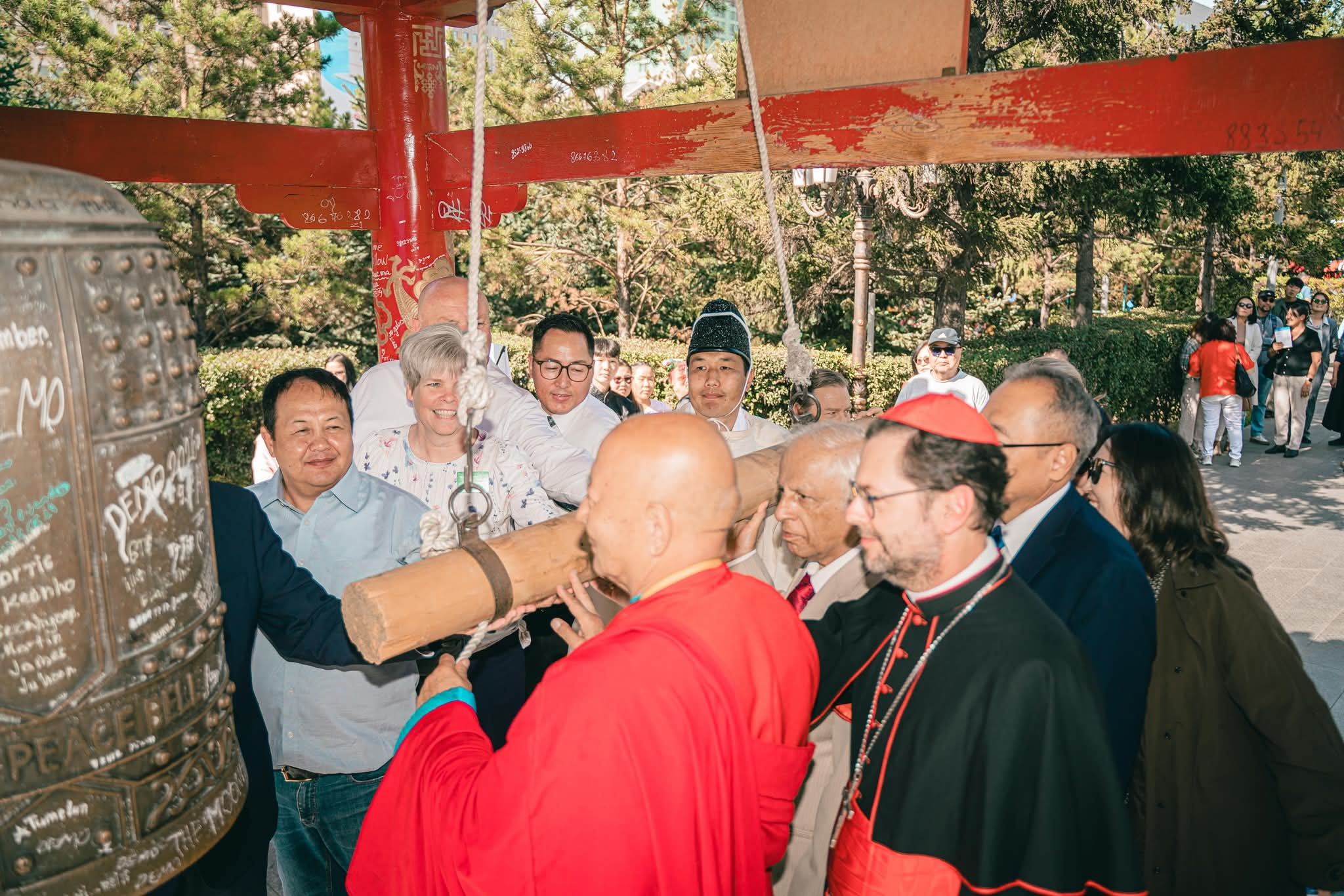
Dialogue: one bell, many religions, a single prayer for Peace
When walking near the city’s main square, it is hard to miss it. It stands elegantly amidst the greenery, and anyone passing by is inevitably prompted to reflect on what it represents.
We are speaking of the Peace Bell, which has been situated in the heart of the Mongolian capital, Ulaanbaatar, since 1992. A gift from Japan’s World Peace Gong Society—in recognition of the Mongolian people’s commitment to promoting peace—the bell stands approximately 10 meters tall and was crafted by melting down coins donated from all over the world.
This makes it a symbol of unity, friendship, and solidarity.
Each year on September 21st – the International Day of Peace, established by the United Nations – representatives from the various religious traditions present in Mongolia gather here to offer prayers for peace, ring the bell three times, and light a candle.
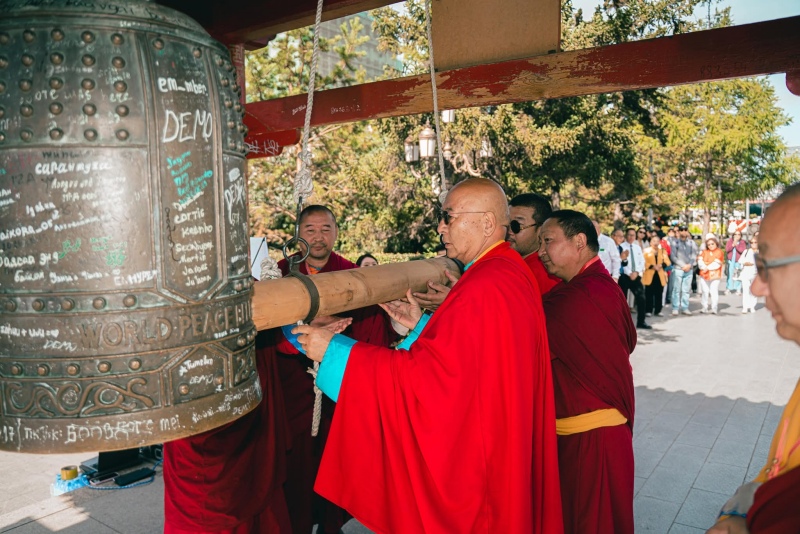
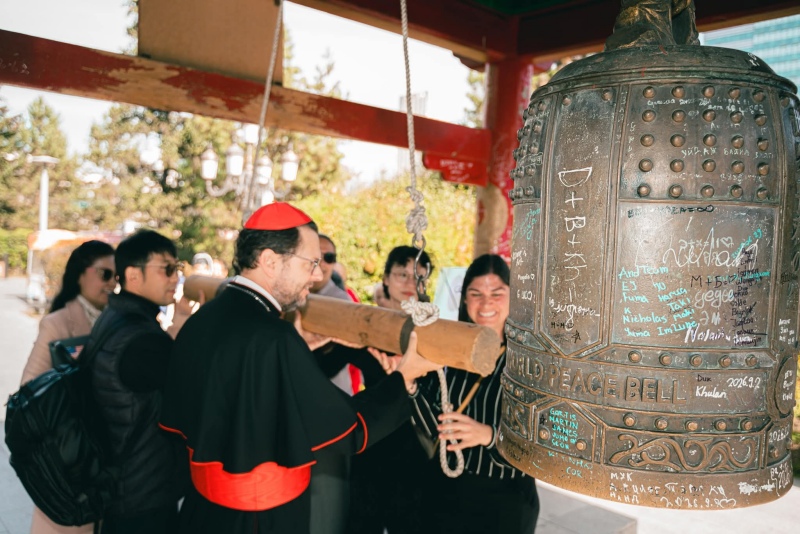
The peals of the bell resonate clearly above the city’s traffic and within the hearts of those present.
Buddhists, Hindus, Shintoists, Muslims, Christians of various denominations, Jews, Bahá’ís, and representatives of shamanic traditions share this space, where dialogue transforms into prayer and communion – a testament to a possible fraternity that begins with small steps, with hearts united to build the common good for everyone, everywhere, every single day.
“It is a sacred task for all of humanity to keep hope alive, to keep dialogue alive, and to keep love alive in the heart of the world”
This is how Pope Leo XIV expressed himself during his address for the sixtieth anniversary of Nostra Aetate; the events taking place in the city of Ulaanbaatar—along with other small steps—serve as a light and a testament to this.
Sr. Francesca Allasia, mc