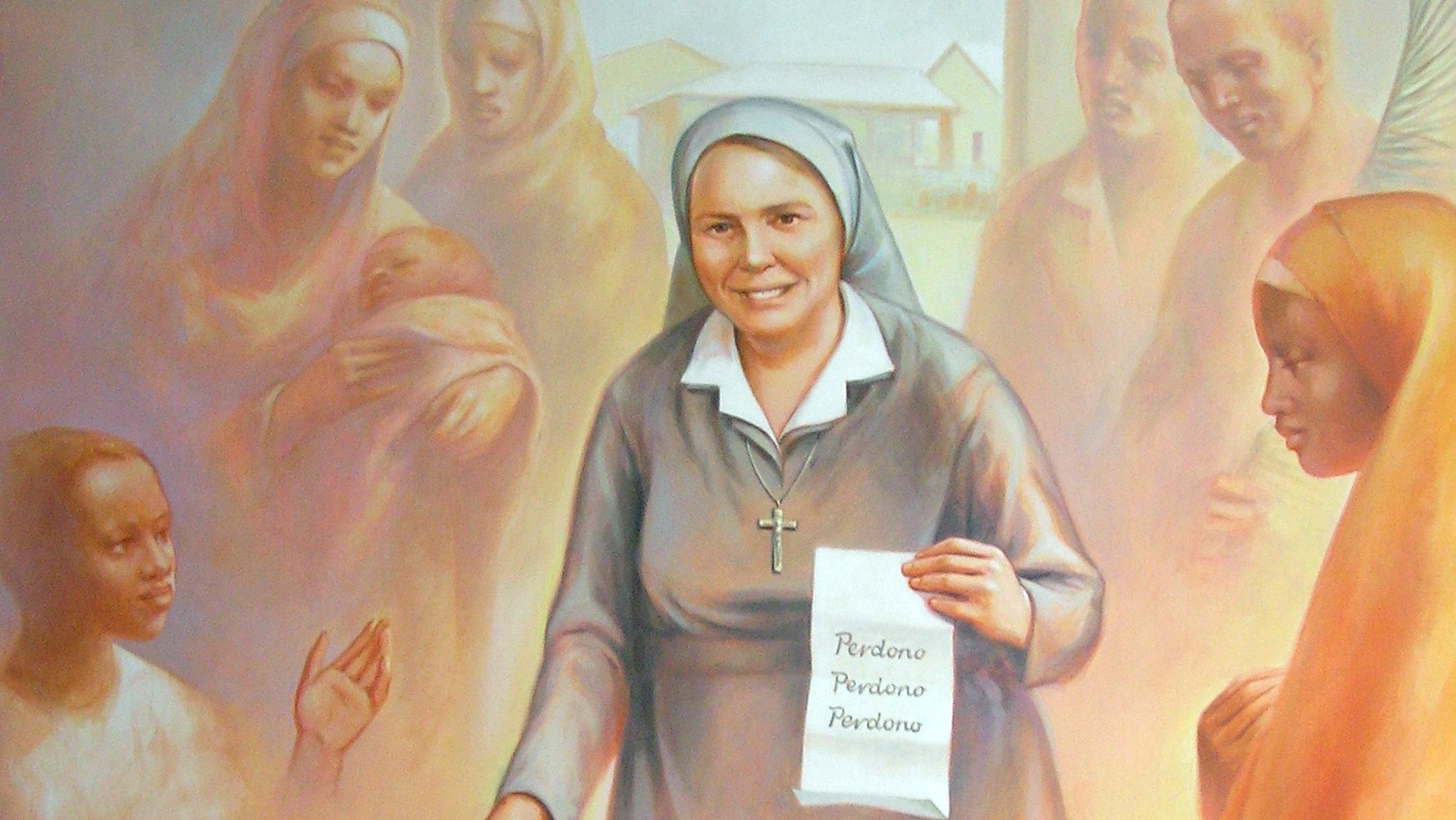


For Blessed Irene Stefani, even rest became a time of service and love. When the daily toils seemed over, her mission continued; the evening hours became a precious time for correspondence. She wrote letters to encourage those who were discouraged, to gently admonish those who needed to find their way again. The list of letters to write was always long. Many people turned to her to send news to distant family members, and Irene, with patience and thoughtfulness, transformed each letter into a gesture of closeness and consolation.
What matters is the quality of time spent
“There is a season for everything, and a time for every event under heaven.
There is a time to be born, and a time to die;
a time to plant, and a time to uproot what is planted;
a time to tear, and a time to sew;
a time to keep silent, and a time to speak.
There is a time for every matter and for every deed.” (Cf. Ecclesiastes 3:1-17)
The book of Qoheleth reminds us that the existence of man and woman is not a random succession of days and events, but unfolds in a time in which every event and every season has a meaning and a reason for being. This awareness leads us to recognize that time is not a property to be possessed or a reality to be dominated. It is God’s time, a gift entrusted to us.
Precisely because time is a gift, we are called to live it responsibly. God entrusts every moment to us so that we can choose how to use it and with whom to spend it. The value of time, in fact, does not depend on its duration or the efficiency with which we fill it, but on the love we sow within it. When time is given to God and our brothers and sisters, it becomes a place of growth, communion, and salvation.
Time as a gift and offering
As we explore the story of Blessed Irene Stefani, we discover a woman who knew how to make time a gift, entirely offered to God and her brothers and sisters. A tireless missionary, she dedicated her days to serving the sick, the poor, and everyone she met along the way. Even when the daily toils seemed over, her mission continued; the evening hours became a precious time for correspondence.
She wrote letters to encourage the discouraged, gently admonish those who needed to find the right path, console those who were suffering, and offer counsel to those who entrusted themselves to her spiritual wisdom. Even her time of rest thus became a time of charity, transformed into a discreet yet concrete presence in the lives of others.
The list of letters to write was always long. Many people turned to her to send news to distant family members, and Irene, with patience and thoughtfulness, transformed each letter into a gesture of closeness and consolation.
This act of dedication, however, required considerable time. Each letter, received or sent, was the fruit of patient listening and long conversations, necessary to fully understand situations, gather what was truly important, and transform it into words capable of supporting and enlightening. Helping these simple people overcome a difficulty represented a concrete form of charity.
Correspondence became a means of doing good, since Sister Irene, in addition to faithfully transcribing the requested message, always added a word of encouragement or good advice.
As an example, we present the letter that, in May 1929, a woman named Lucy asked Irene to write for her distant son.
“Andrew, my beloved son,
Praised be Jesus Christ! I received your letter: I didn’t find the time to reply sooner, but unfortunately I’m still dealing with the usual tribulations. I’m sick now and I want you to pray to God for me as much as you can. If you could also send me what you told me, I really need it.
My dear son, persevere in our holy religion; spread it both through good behavior and through words.
I was told you are a stonemason, and I’m happy about it. Offer your labors fervently to God every day, so that you don’t become just a money-seeker. During this month of May, pray the Rosary often and strive not to commit even the smallest sin.
Remain well in the Heart of Jesus, where I leave you.
I, Lucy Wamboi, your mother in the Lord.”
Reading that letter, Andrew would certainly have almost heard his mother’s voice, intertwined with that of the other woman who in the Lord had become a true mother for him: Sister Irene. He would have recognized the handwriting, but above all the unmistakable style, capable of transmitting affection, comfort and hope.
Moments of rest should not be wasted…
Irene understood that it doesn’t matter how much a person accomplishes in a single day or over the course of an entire lifetime. What matters is the quality of the time spent, when every action, even the most humble and hidden, is inspired by love. For this reason, she did not allow even moments of rest to be wasted, but offered them to God, continuing to serve her brothers and sisters through closeness, prayer, and the written word.
The holiness of Blessed Irene Stefani arose precisely from this faithfulness lived day after day: she was able to fill the time God had entrusted to her with love, transforming every moment into an opportunity for communion with Him and service to her brothers and sisters.
In conclusion, we can say that our life, however short and intense, offers us the time necessary to accomplish what God entrusts to us. The true challenge is not to do everything, but to live every moment as God’s time, transforming it into a gift for others and filling it with the love that alone makes existence fruitful. Thus, time, from a simple succession of hours and days, becomes a place of communion with God and service to our brothers and sisters, preparing already on earth what is destined to last forever.
By Postulation
To find out more about the life and holiness of Blessed Irene Stefani: click here