
An extensive period of “listening to every voice” and “constantly reinterpreting” evolved into a profound understanding. This is the missionary experience of Sister Gladys in Colombia.
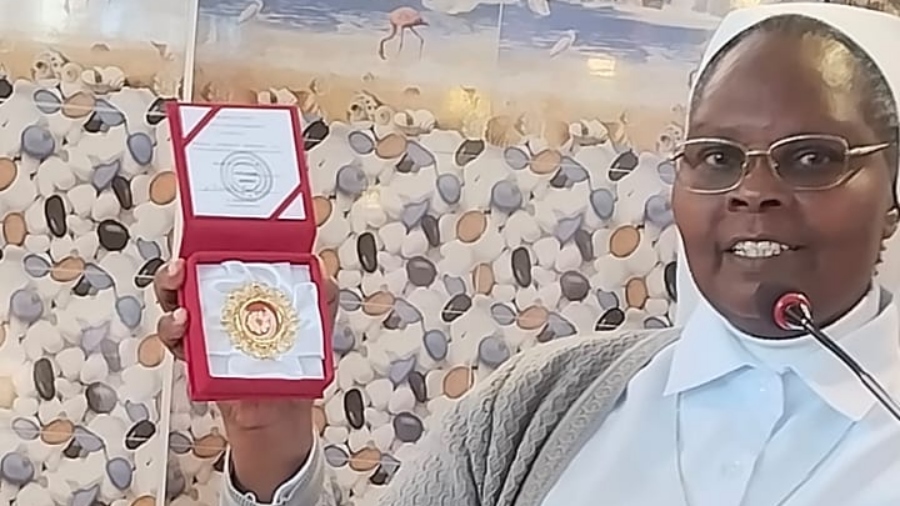
I’m Sister Gladys Nduma, a Consolata missionary. Since my arrival in Colombia in October 2014, I’ve been on a journey that has profoundly shaped my vocation. After the first few months in Bogotá to sort out documents and learn a bit of Spanish, I was assigned to the community of La Tagua in the south of the country where I have been for 4 years before joining the community of Puerto Leguìzamo 25 km from La Tagua, in 2018.
In both communities, I worked with the indigenous communities found along the river bank of River Caquetá, be it at the community level or in semi-urban settings, always working with adolescents, youths, catechists, and families.
This was a period of intense learning and adaptation to the new reality. The experience has been deeply shaped by daily contact with the indigenous communities we regularly visited along the Caquetá River. It was there that I understood the true meaning of being a missionary: “Being a missionary for me doesn’t mean teaching; but having a big heart to learn from the people: their language, their cosmovision, their culture, even how they walk.”
This profound cultural humility, born from my initial openness, truly facilitated a deep, incarnational witness. Any early “unnecessary difficulties” in learning basic survival skills directly from the community only deepened my understanding and respect, allowing for genuine connection and consolation.
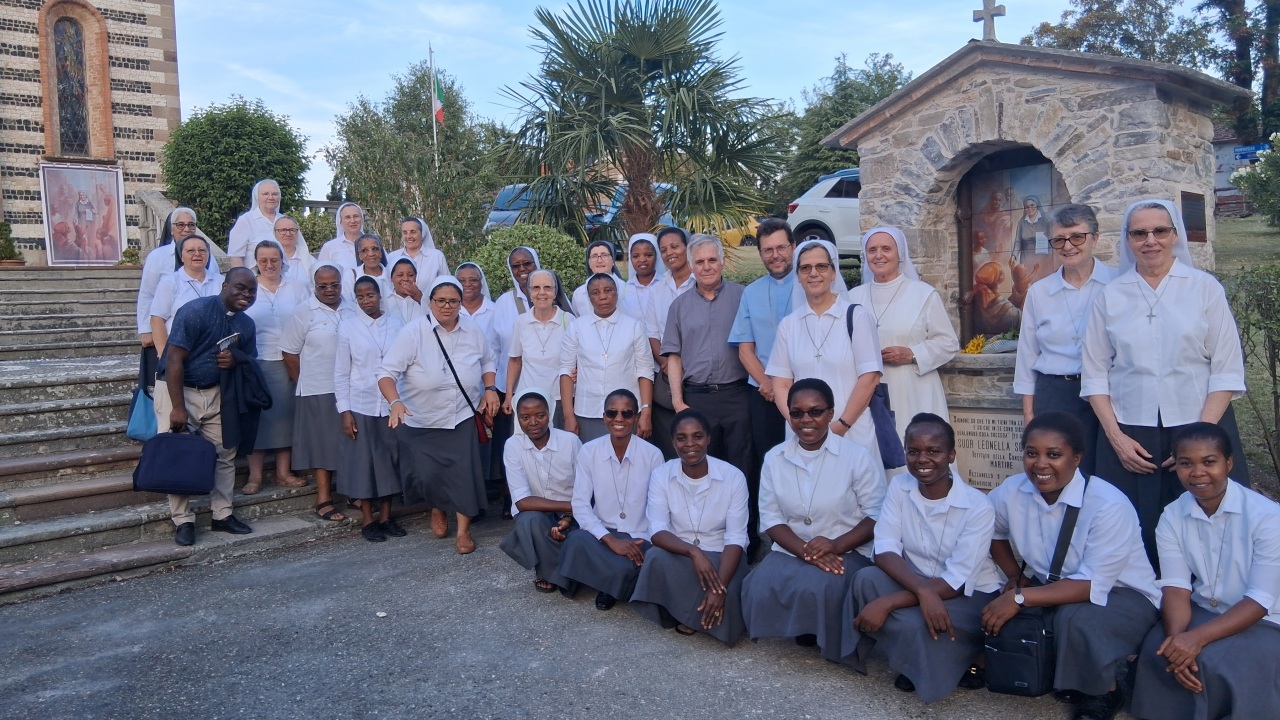
My gratitude goes to all the missionary team who accompanied and continue to accompany me in this mission. They teach me how to be with people, how to love what the people love, especially the culture, the gastronomy, the common dictum of the people, how to appreciate missionary life experience, how to live the present with continuous evaluation initiated at different levels, from personal to that of the local Church.
Together, we transformed our community and our vicariate into a small Bethany. A place where many found spiritual and physical refreshment. This has been animated by the motto of the vicariate, “the Good Samaritan” – a call to all missionaries within to be Samaritans of the injured people within our boundaries and beyond.
Thank you, sisters, thank you missionary team because walking together our small presence in the vicariate testifies for herself, thank our Monsignor Joaquin Umberto Guiza because of your humility, your support, your simplicity, encouraging words, your examples have been a compass that mark the right direction to follow in the mission.

Visiting Riverine Communities: Learning from the People
I remember my first clumsy days with a smile. How can I forget falling out of a boat and a five-year-old boy telling me: “Sister, you shouldn’t put your foot on the side of the raft; you should put it in the middle so you don’t fall again!”
Yes, it was my first time to learn the balancing coming out of the boat; I had to learn even the obvious things in this context. Such moments, initially challenging, served to build authentic trust and deeper understanding, offering a powerful consolation of shared humanity.
I learned to share a smile with anyone who approached me and to participate in the joy of “Murui” dances in the maloca. It was right there, in the maloca, that I learned to pray like the Murui, to listen to the Mother Earth, and to ask permission from living creatures.
Here, I became aware that things do not just happen but they are ordered and I cannot take anything for granted. I had never thought before of the importance of asking permission from the tree to pick fruits, or asking for permission to enter the “madre terra” to pick woods or for other needs, yet the indigenous community has made me aware how important every action is.
For these indigenous communities, we are interconnected, either by animated or inanimate beings, and we are all equal before each other. Respect and equality towards other beings is portrayed by a continuous awareness that human beings are not superior to any other beings. I learned to listen to the wisdom of the old one, who prescribed specific diets for spiritual growth, good interrelation among all, as well as learned to listen to the newly born who taught me the mystery of life.
This extensive period of “listening to every voice” and “constantly reinterpreting” evolved into a profound understanding that informed every subsequent action, ensuring our solutions were truly contextualized and sustainable, a deep consolation to those seeking lasting solutions.
Learning is not only about the new things but also capacity to relearn, to reinterpret what was already learned before, like how to plant the cassava. The openness of communities to learn and appreciate simple things such as the animation of the music known during the Mass taught me how to appreciate every instant, no matter how simple or small, like playing a guitar or playing a drum; these are things which make the days enjoyable. Celebrating the Mass on the leaves of the banana was among the simplest ways I can recall but a Mass celebrated with a lot of love and concentration and faith.

The mission is for me a moment spent in the kitchen with the women learning how to prepare “caguana” with the village women or that moment they taught me how to sleep on the hammock, listening to each person’s story. I understood that consolation isn’t so much about indoctrination as it is about spending time in active listening, allowing our presence to speak to one another, making us feel desired and loved.
My mantra became: “Accompanying each person from where they are, not from where I want them to be.” This commitment to “accompanying exactly from where they were,” even if it meant “avoiding difficult conversations” initially, proved to be the bedrock of trust-based empowerment. It created a safe space where true self-discovery and sustainable growth could flourish, offering immense consolation through genuine acceptance.
Teamwork and Missionary Humility
This mission taught me the importance of being a sister within the missionary team that visits the communities. You never move alone; it’s essential to inform the entire team of every movement, even asking to be accompanied for a short errand.
Dependent on others, it consists of learning to communicate with clarity, to make decisions together for every move during our stay in the visited community. In the beginning, it was a challenge, but after a journey made in this reality, the dependence on one another became clear, demonstrating not only the autonomy of each team member but also the strength of the group. While families provide for all needs for missionaries while in the mission.
Sister Gladys, mc