Turin, the capital of the Piedmont region, was founded by the Romans in the 1st century BC. The city is immersed in greenery, gently nestled among the hills, crossed by the Po River and surrounded by the Western Alps. Turin was Italy’s first capital, and among its many churches rich in art, the Sanctuary of the Consolata stands out. It was in this sanctuary that Saint Joseph Allamano returned to the house of the Father on February 16, 1926.
During the funeral, as the body of the rector of the Consolata was being carried to the cemetery, someone said: “Canon Allamano will not stay at the cemetery, but will return home.” And an article published on February 18, 1926, in the newspaper “Il Mattino” concluded:
“Canon Allamano cannot rest except in the Sanctuary of the Consolata or with his Missionaries. His heart, his spirit, his smile, his charity remain where he spent his entire life in holiness.”
These “prophecies” came true 12 years later, when on the morning of October 11, 1938, the coffin containing Allamano’s remains was transported from the general cemetery to the church next to the Mother House of the Missionaries and, in the afternoon, was buried in a sarcophagus located in a side chapel.
The Father returns home, among his sons and daughters!
Indeed, beyond the stained-glass window behind Allamano’s sarcophagus, which overlooks the courtyard, stands the Missionaries’ Motherhouse, and a little further away, the Missionary SIster’s’ House. The two buildings were commissioned by Allamano to house those who entered the missionary family he founded.
The Missionaries’ Mother House, built on a large plot of land on Circonvallazione Avenue, now Ferrucci Avenue, welcomed the Consolata Missionaries, founded by Allamano in 1901, in October 1909. For nearly a decade, they had resided at the “Consolatina” at Corso Duca di Genova 49, in a house they were forced to leave because there was insufficient space to accommodate other young people who asked to join the nascent missionary family.
Canon Allamano, while continuing to reside at the Shrine of the Consolata, regularly visited the Mother House to oversee the formation of the young missionaries. He arrived promptly every Sunday afternoon and sometimes even during the week. Every opportunity was a good one to meet with his sons. The seminary’s “Diary” notes:
“Since we have been in the new Institute, the Most Reverend Rector has rarely missed coming every day, generally from around 5:00 PM until around 7:30 AM.”
The Mother House of Consolata Missionary Sisters
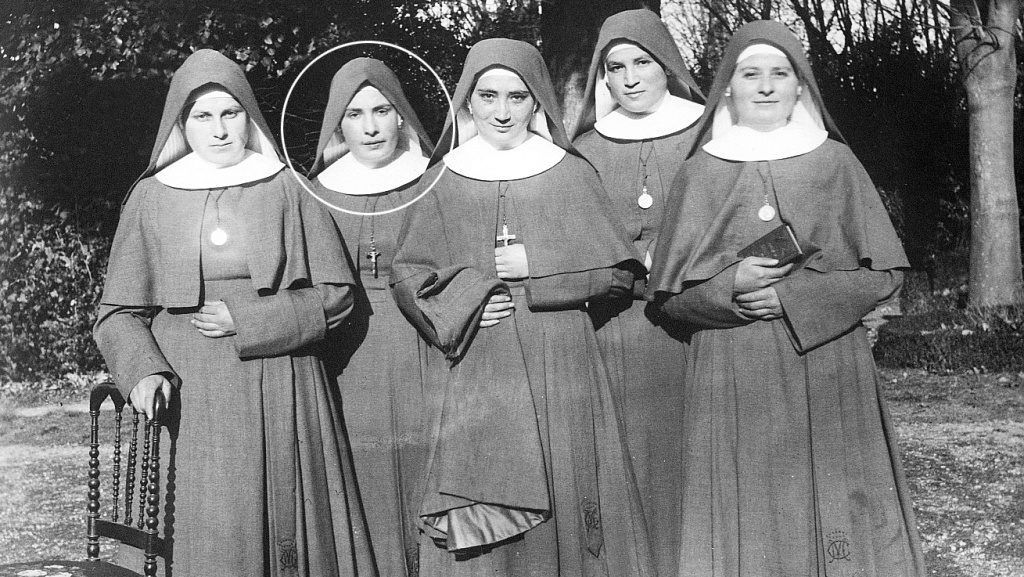
The Consolata Missionary Sisters’ residence, founded by Allamano in 1910, was initially located in the “Consolatina,” which had housed the missionaries a decade earlier. In 1911, a year after its founding, Allamano began seeking better accommodations for the many young women entering the Institute. After several unsuccessful searches, Allamano and Camisassa decided to begin construction of the Missionary Sisters’ house near the Missionaries’ house, on land belonging to Allamano, overlooking Bruino Street and Coazze Street, which had been used as a vegetable garden.
Construction work began on April 19, 1915, but due to the difficult war situation the country was experiencing, the Consolata Missionary Sisters’ community was only able to enter their Motherhouse on September 4, 1922. Allamano, like the missionaries, continued to train the missionaries, which is why he regularly visited their home.
Two areas of the Missionary Sisters’ house are still charged with meaning and keep alive the Founder’s presence: the “hall” and the “green room.”
The Hall
The hall was the place where we met to celebrate with the Father, the Co-founder, and the Sisters. The Golden Thread (the Motherhouse diary) reports:
“In the afternoon, after the blessing, we all gathered in the hall. Sisters! It is the Our Father we have been awaiting after three months. As soon as we see him, we burst into festive cheers. He passes among us as we make way for him, he looks at us all one by one, and his gaze brings such peace to our souls.” And again: “After the afternoon services, we greet in the hall, with a unanimous cry of jubilation, our beloved Father, whom we had not received among us for so long. ‘There are so many of you,’ he says, ‘but it’s not the number that counts, it’s the spirit.'”
The Green Room
The “Green Room” was the place for personal encounters with the Father. These were privileged moments of individual dialogue, discussion, and personal experience of the Charism that emanated from him. Mother Maria degli Angeli recounts:
“He wanted all the Sisters to have the opportunity to approach him and speak to him freely, both in the Motherhouse and at the Consolata Shrine. He welcomed everyone with great charity, and treated everyone with a truly paternal heart. When the Sisters emerged from his audience, they were always smiling; so much so that when a Sister was particularly cheerful, it was said: ‘She has undoubtedly been with the Father.'”
The Sanctuary of Saint Joseph Allamano
The Sanctuary of Saint Joseph Allamano, known as the “Founder’s Church” because a side chapel houses the tomb of Saint Joseph Allamano. It is a sacred place, a destination for pilgrimages, a space that invites one to pause, pray, and meditate.
According to ancient Christian belief, a saint’s tomb is like his earthly “home,” while he lives in perfect communion with God. It is the “dwelling” from which he continues to spread blessings, encouragement, and consolation. The body of saints, in fact, sanctifies the place where it is placed and those who frequent it: “it is a source of sanctification and blessing for all.”
In this chapel, one truly feels as if one is in the home of Saint Joseph Allamano, feeling him alive and present: “the voice of these silent bodies is more powerful than that of the preachers”; here resounds the memory of Allamano’s words:
“When I am up there, I will bless you even more.”
This is how the Consolata Missionaries, Allamano’s devotees, and friends and collaborators of the missions have always considered this place; they come here to draw strength and inspiration. From this home, in his family, Saint Joseph Allamano instills “new life in the branches of the vine he planted and made fruitful.”
On the sarcophagus, Allamano is depicted sending his sons and daughters on missions; this gesture is accompanied by the Latin inscription: “They will announce my glory to the people.” The name “Joseph Allamano” is carved in large letters on the slab sealing the sarcophagus.
The stained-glass window behind the sarcophagus (starting from the viewer’s left) depicts:
The Consolata Sanctuary, where Allamano carried out his priestly ministry for 46 years.
The icon of the Virgin Consolata, whom he loved and venerated, convinced he had received everything from her.
A world surmounted by the cross, which recalls his passion for the evangelization of the people.
The figure of Saint Joseph Allamano pointing to the world with his finger, a gesture complemented by the inscription below: “First saints and then missionaries,” which emphasizes the essential prerogative of being authentic evangelizers.
The motherhouse of the Missionaries is connected to that of the Consolata Sisters, underscoring that the two missionary families were born from the same Charism.
The Hall of “Memories”
Next to the chapel where the Founder rests, since 2001 the mortal remains of his main collaborator, Canon Giacomo Camisassa, have also been laid to rest: our two “Fathers,” the Founder and the Co-Founder, are among us, close to each other.
In this space dedicated to “memories,” in addition to various objects belonging to our Saint, stands a small painting of the Consolata, which hung on the wall in Giuseppe Allamano’s room and has become part of our history. In fact, in January 1900, during a serious illness that brought Allamano to the brink of death, he gazed at the image of the Consolata and promised that if he recovered, he would found the Institute, and the miracle came true. Allamano jealously guarded that painting.
Consolata Missionary Sisters is an international religious congregation, founded in Turin on 29 January 1910 by Saint Joseph Allamano, we serve the Church in the mission of first proclamation of the Gospel to those who do not yet know Jesus Christ, the true consolation of the Father.
Called by the Holy Spirit to share in the Charism, God’s gift to Father Founder, we offer our life to Christ forever, in the mission ad gentes, that is, to non-Christians, for the proclamation of salvation and consolation.