

“How beautiful upon the mountains are her feet, she who brings good news”. This year’s Feast of Our dear Sister Blessed Irene Stefani took place at Gikondi, in the Archdiocese of Nyeri, the place where Blessed Irene offered herself totally and completely to the point of dying for Love, as the local people describe her death ‘Love killed her.’ Thousands of Christians from near and from far devoted to Blessed Irene joined together in chanting her praises and heroic virtues through speeches, experiences, prayers and local songs composed for her. The Archbishop Anthony Muheria invited us while doing the procession, to enter into the reality of the life of Irene, the same land that she walked on, let us walk on it with her because she is still walking on this land even today, conversing with her, asking for blessings and miracles from her. The procession begun solemnly from Gikondi Parish church to the village grounds where the mass took place.The theme that ran throughout the celebration was that of Love above everything else. Love pushed Sr Irene to go up the hills and down the valleys, bend her self to the little of the little given a chance, her glorious boots would describe every detail of the passes she made in a day. We were challenged as Christians to let Love be the motive of what we do. Sr Irene like Saint Paul will tell us what Love is: that Love is patient, Love is Kind, is not proud, does not dishonour others, is not self-seeking, is not easily angered, keeps no record of wrong (1Cor 13) The emotional part of the celebration was the sharing of the testimonies of people who have received graces and miraculous healing from Blessed Irene. Two teenagers a boy and a girl who could not walk were granted the grace of walking. For this the relic of Blessed Irene was passed around so that each person looking at her, will have a chance to pray directly to her. We pray and continue to hope that through the many graces people have received through the intercession of Blessed Irene she may be soon canonized and her virtues be emulated and lived by the universal Church. Sr. Winniejoan, mc Do you know Nyaatha’s Life? Click here!
My missionary life in Mozambique
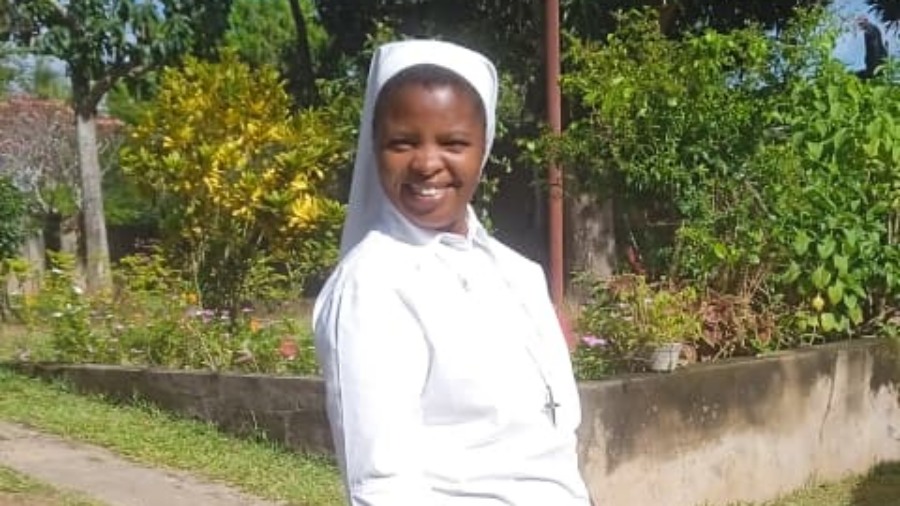
I am Sister Elda Kanisia Msemwa, born in Tanzania. After my first profession and missionary experience in my homeland, I was sent as a Missionary in Mozambique. I arrived in the promised land that the Lord had prepared for me on 25th March 2023. I had mixed emotions, I was very happy to come to this land, open to what the Lord had prepared for me, and at the same time, I also had fear. I was aware that Mozambique was experiencing a period of instability and lack of peace, especially in the northern part of the country. But I had great faith in the Lord. The first steps I was welcomed with great joy by the Sisters who were waiting for me, and by these dear people of Mozambique who welcomed me with smiles and simplicity. This welcome made me immediately feel at home. I couldn’t speak much because I didn’t know the language. I used to communicate through smiles and offering love. I stayed a few months in the capital, Maputo, to learn the Portuguese language. I thank the sisters and the people who helped me a lot in knowing and practicing the language. They encouraged me a lot to speak, correcting me when I made mistakes with such ease. Within a short period of time I was able to understand and express myself. In Maputo, I participated in the life of the church in various ways, sharing life with the people and with other religious women. What touched me and gave me much joy was the simplicity of life , the welcome that makes everyone feel at home, without distinction , the liturgy animated in a very lively way, full of cultural symbols, with very profound meanings, the Church open to ministers, where everyone can carry out a service, especially women and lay people. I also had the grace of participating in the care of the sick sisters. It was a moment of grace to be able to participate in the final stretch of their lives, right up to their last moment. I learnt so much from these sisters: faithfulness to their vocation and mission until the end , great love for Christ even in times of pain, great love for the Consolata and our Founding Father, St. Joseph Allamano, and love for the people entrusted to them. It was a gift that challenged me, at the beginning of my missionary life in this land. In Massinga After studying the language, I was sent to Massinga in the province of Inhambane, 500 km from the capital, a city with a large movement of people. I joined a community of four Sisters. I was warmly welcomed by everyone, both the Sisters and the Christian community. The community offers service in the parish , where we collaborate with three diocesan priests, visiting the communities, families, the sick, groups… We also work in the nursery school , and in the reception center for girls who come to study in Massinga. We participate in people’s moments of joy and sadness, in the celebration of life: weddings, sacraments, birthdays, and in difficult times of mourning and political instability. Moments of celebration are of great value , because these people recognize that life is a gift from God, and celebration is a time to say “thank you,” together as a family, with relatives and friends. With the students I spend most of my time with the girls in our Center who come from rural areas with no secondary schools. Their families can’t afford their education, so as a community, we welcome them and make them feel at home, allowing them to attend high school here in the city. Some of them ask to join our Consolata family. The hard work is making them feel welcomed, loved, supported, and valued , giving each of them space to grow at their own pace, listening to them and trying to address their concerns. I am very happy to be able to be part of building their future , it gives me so much joy to see the growth of these young women and the transformation of their minds and hearts. My lesson Mission is a learning experience: through these girls and the people around me, I have learnt a lot, especially the values. They’ve taught me a lot about respect for others: when you greet a group, you don’t just say a general greeting, but you greet each person, asking how they’re doing. I’ve felt this is very beautiful, because it shows the value of each person. And many more other beautiful examples. I thank the Lord for giving me the opportunity to live and share my life with these people, who have helped me grow so much in my missionary vocation. Over these years, I have learnt that mission isn’t just about teaching or doing things ; it’s also very important to listen with the heart, to be present, to make sure each person feels welcomed, listened to, and valued. Here, we don’t count the hours, but we give time. The people have taught me to give time to everything I do, because sometimes we rush here and there, forgetting the value of the individual. Sr. Elda Kanisia, mc
LMC National Meeting MOZAMBIQUE
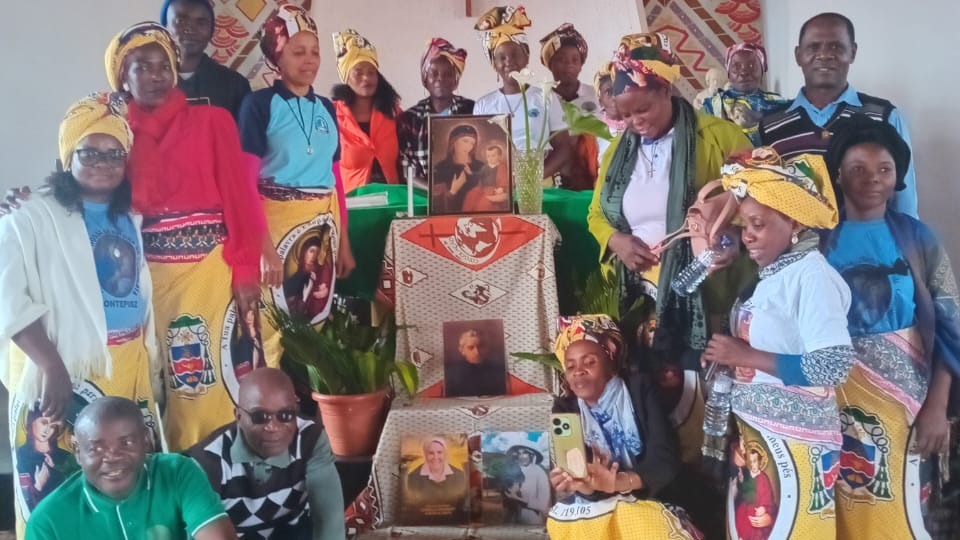
JUNE 19TH AND 20TH THEME: TO BRING THE CONSOLATION OF MARY, JESUS CHRIST, TO ALL THE PEOPLES OF THE EARTH”. The various LMC groups in Mozambique met for their first national assembly in the parish of Imaculada Conceição de Nzinje – Lichinga. Host groups from Lichinga, that is, Nzinje, Ceramica, and Catedral, Montepuez, Nampula, Massinga, Matola, and Maputo participated with approximately 53 participants. The purpose of this assembly was, each to share their journey, review and adapt their statutes, and then elect the National Coordination Committee of the LMC in Mozambique. The first day was very enriching and engaging, listening to each group’s diverse experiences in living the charism of Consolation and its spirituality, inherited from our Founding Father, Saint Joseph Allamano. Through the sharing, it was noted that the groups, while sharing the same fundamental principles, are at different stages of their lay journey: some already have commitments, missions, and parish recognition for the missionary apostolate, while others are little more than in the embryonic stage of their formation process. Sr Innocenzia Mzena shared with the group, emphasizing on the three pillars of Allamanian spirituality, that is, Love for the Eucharist, Marian devotion and the Missionary apostolate. The second session was explaining the requirements and criteria for electing the national coordination group. The elections were held and it was decided that the headquarters of the LMC Mozambique would be in the diocese of Nampula, because it is the most centrally located in the country and has the most recent lay group.

Triduum to Blessed Irene Nyaatha – Third Day
Third Day
DO GOOD WELL AND WITHOUT NOISE

Triduum to Blessed Irene Nyaatha – Second Day
Second Day
I WANT YOU TO BE EUCHARISTIC MISSIONARIES

Triduum to Blessed Irene Nyaatha – First Day
First Day
GOD ALONE AND HIS WILL

Holiness in the daily life – Saint Joseph Allamano
Towards the Centenary of the birth into Heaven of Saint Joseph Allamano, Consolata’s Family listen to the Founder. In this article, Allamano is talking about the the santity in the daily life. We have just celebrated the first anniversary of the canonization of St. Joseph Allamano on October 20. It was a moment of celebration but also as a time of grace that reaches all of us who let his life and spirituality inspire our lives, our choices, our actions, our relationships. In fact, the holiness lived and proposed by St. Joseph Allamano, master of the spiritual life, is an expression not only of a person who knows the depths of the human heart, accustomed as he was to listening to what moves within himself and in others, but above all of one who knows the ways of God, committed from a young age to following Him with fidelity and love, putting Him at the center of his life with the firm purpose of fulfilling His will. Extraordinary in ordinary things Joseph Allamano had a deep love for God and for the person, near and far, for those he has before him as their spiritual guide, formator, confessor, sons and daughters to whom to transmit a charism and for those who were far from him, geographically and otherwise, those who lived in the borders where God’s love had not yet been proclaimed. His gaze went far beyond the world he knew. An expert connoisseur of God’s ways, he knew how to recognize and encounter Him in everyday life, in the present moment and not only in the great and extraordinary events that happen sporadically. The holiness that Joseph Allamano proposes is made up of small gestures, in the concreteness of every day, in being “extraordinary in the ordinary“. The call to holiness is a call made to everyone and possible to everyone. Everyday life is not a repetition of actions or ways of doing things, a day similar to the next, perhaps lived with a certain boredom and lack of interest. Everyday life is the privileged moment and place, the here and now, where God’s grace reaches us, where we meet God who continually seeks us and invites us to a communion of love, and this makes our days full of opportunities to love God and our brothers and sisters, near and far, without exception. This is the way of holiness that Allamano proposes: “One does not often have the opportunity to do extraordinary things, instead the ordinary ones happen every day and all day long…. Not extraordinary things, but being extraordinary in the ordinary.” Pope Francis expresses it well in the Apostolic Exhortation Gaudete et Exsultate: “It is only a matter of finding a more perfect way of living what we already do: ‘There are inspirations that tend only to an extraordinary perfection of the ordinary exercises of Christian life’. When Cardinal Francis Xavier Nguyên Van Thuân was in prison, he gave up consuming himself while waiting for his release. His choice was: “I shall live the present moment, filling it with love”; And the way in which this was done was: “I seize the opportunities that present themselves every day, to perform ordinary actions in an extraordinary way.” “I’ll do everything well” Joseph Allamano lives daily life as an opportunity to do good well: “Let us imitate Our Lord. Let us do our duty for a good end, and then we can say that we do everything well. Bene omnia facio, I will do everything well. The secret of becoming saints is not to do big things, miracles, etc., but to do things well.” “Good is to be done well and without noise” is typical of his way of being and doing, as it was for his uncle St. Joseph Cafasso, and he repeats it insistently to his sons and daughters. To do good always and without noise, motivated by the love of God and not by personal pursuits, avoiding the risk of selfishly putting ourselves at the center of attention but doing everything for the Lord, and only for the Lord. “I have the idea of Cafasso, that good must be done well and not noisily. To do good promptly, exactly, with good will. It is not enough to say the rosary, it must be said well. If we study, we study well. If we work, we work well and do well all the actions of the day.” I begin Allamano, however, was well aware of the struggles that we fight daily within ourselves due to our own fragility. He knew that there can be and there are falls and regressions that tend to discourage us on the path of goodness and from this comes his insistence on always starting again, continuously, “nunc coepi“, knowing how to get up. “If we think: in a month, how many blessings! Nunc coepi [now I begin] we must say if we see that we have behaved wrongly. St. Teresa owes her sanctification to the continuous saying: I begin…”. “Forty or fifty times a day; she asked the Lord for forgiveness and exclaimed: “This is grass in my garden, it is not well cultivated!” Sowing goodness The situations of great suffering and upheaval that the world is experiencing today, the urgency for peace that rises from the depths of the hearts of entire populations at the risk of their lives, are urgent invitations and calls to put the good into circulation. To be people who allow themselves to be reached by God’s grace, on a journey of growth and transformation and to transmit small concrete, daily gestures of goodness, benevolence, reconciliation, peace. Living the Gospel in a radical way is possible for everyone according to the intuition and life of Joseph Allamano. For personal reflection

Missionary mandate according to the Consolata Missionary Sisters
Consolata Missionary Sisters Institute was founded by Saint Joseph Allamano on 29th Jan, 1910, in Turin, Italy. The deep inspiration that he got from God was to take Jesus, the true consolation to All, especially to the non-christians. We are a Marian Institute, devoted to Mary under the title of “Consolata”. As an Institute, we have a unique aspect of our missionary tradition, that is, the celebration of a Missionary Mandate. This takes place after the first vows and a period of service in one’s own country of origin or Region. As soon as a Sister receives her destination, the Missionary Mandate is done before she departs for her new mission for evangelization. At times it brings confusion, as many people tend to think that it is a Final Vows celebration. It is absolutely NOT. The profound meaning of the missionary mandate From the very beginning of our history, the Consolata Missionaries have received the missionary mandate. Our founder, Saint Joseph Allamano, said to the first departing nuns: Know that the Lord and the Consolata accompany you, and every morning from six to seven, right before our Mother, I offer thanksgiving at Holy Mass, praying especially for you. Remember that for each of you, and on your feast days, I will especially note your feast day. A Missionary mandate is the commissioning within a Eucharistic celebration in which the Consolata Missionary Sister is sent to be a testimony of God´s love and consolation to the people. It has its biblical foundation from Mt 28:19: “Therefore go and make disciples of all nations.” And in Isaiah 66:19, which is OUR MOTTO “ They will announce my glory to the nations”. As members of the Catholic Church, in communion with and sent by the Church, we bear witness to and announce Christ according to our Charism, inspired by the motto given us by Father Founder: “They will proclaim my glory to the nations” (Constitutions, 6) It takes place in the parish of origin of the particular Sister because this is where the first seed of faith was planted. It is in the family and in the local church that for the first time the Religious Sister became a child of God through the sacrament of Baptism. This renders the local church the cradle of the missionary mandate, and a sign that She (the local Church) has grown and is mature enough to share her missionaries for evangelization. The Missionary Mandate celebration involves several steps, that is: The Calling The Sister is called by name by the Regional Superior from the assembly as a sign that God calls us from our concrete reality, our families. She walks towards the altar accompanied by the parents and she is offered to the Church through the Priest. The main celebrant blesses the parents and they go back to their seats while the sister sits in a designated place together with her fellow sisters then follows the homily. The Interrogation The Mandate ceremony takes place after the homily whereby the Sister affirms her readiness to be God´s instrument through answering the questions asked by the celebrant. During the mandate, the Sister receives the Crucifix, the Bible and the Rosary after they have been blessed by the Celebrant. The Cross The Sister receives the Cross of our Lord Jesus Christ as her consolation and guidance, to support her in the apostolic work and defend her against the dangers of evil. This affirms the words of St. Joseph Allamano when he says, ‘this cross will be for you, a book, a friend and a weapon which will defend and protect you from spiritual enemies.´´ The Bible The Sister receives the Gospel of our Lord Jesus Christ, inviting her to be a faithful witness to the truth in love, to live by the message she announces and bring to people the message of salvation. The Rosary The Sister receives the Rosary, a symbol of Our Lady, to be her companion in the journey, a Mother and a model of her life. The Blessing Thereafter, the Sister kneels and the Celebrant stretches his hands to bless her, giving her the power to go and proclaim the word of God where she is sent. Here, the Sister is officially sent by the Church through the Institute to be a Missionary in the whole word according to the Will of God for her. We walk in the footsteps of Jesus, the Missionary son of the Father, who came to the world in order to save souls. Keeping alive the charism that Our Founder received, we bring to reality his favourite words from Ps 117: 17, “ I Will not die but I will live to proclaim the glory of God.” This is exactly what we continue to live through such a celebration. Sr Mourine, mc

The Foundation of the Lay Consolata Missionary in Ethiopia
Mekanissa, June 1, 2025 Lay Consolata Missionary in Ethiopia was established under the support of the Consolata Missionary Sisters. They voluntarily offered themselves to preach and witness to the Gospel, beginning with where they are, in the charism and spirituality of St. Joseph Allamano, the Founder of the Consolata Missionaries. It is indeed good news to us to have this group, for the first time, here in Ethiopia, founded on the feast day of the Ascension of the Lord Jesus into Heaven. Jesus has entrusted His mission to each one of them. The celebration took place in Mekanisa, Addis Abeba, in the Sisters’ chapel. It was a moment of prayer and listening to the word of God in which they understood that God needs labourers in his vineyard and they felt ready to respond to this call. In addition, Sr Getenesh Wolde Amlak explained to the group the nature and purpose of the Lay Consolata Missionaries. The members of this group expressed their joy in having fulfilled their heart’s desire to become Lay Missionaries and encouraged others to join them. The group is under the guidance of Sr Almaz Tesfaye, and as family, we wish a fruitful mission and service in the vineyard of the Lord.

NAVICON: A New Window into Consecrated Life
Rome, September 29, 2025 On the feast of the Archangel Gabriel, patron of communicators, NAVICON is officially launched—an innovative digital platform designed to present Consecrated Life to new generations in an authentic and intimate way. NAVICON responds to the need to share the richness and diversity of Consecrated Life in a language that is both contemporary and meaningful for young people discerning their vocation. “We want to provide a space where Consecrated Life is shown as it truly is: a profound, transformative and life-giving choice,” explain the team members. “It’s not just about providing information, but sharing real stories of men and women who have found meaning in their dedication to God and others.” Accessible at www.naviconsagrada.org, the platform features content such as: It’s a collaborative initiative inviting Religious Congregations, Institutes of Consecrated Life, and Monasteries to unite in offering a shared testimony of their mission in today’s world. The Consolata Missionary Sisters also join NAVICON! See you there too: NAVICONSAGRADA